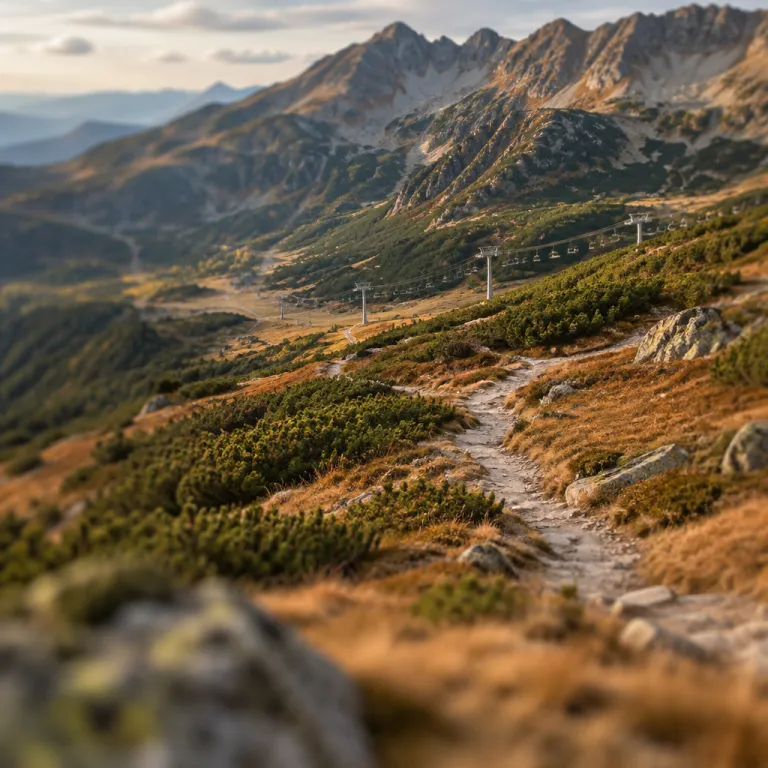
Why late October in the High Tatras belongs to the solo hiker
Late October in the High Tatras is the quietest, clearest moment of the hiking year. The mountains have shed the last summer crowds, the larch forests burn gold, and the first sugar dusting of snow sharpens every ridge line in this compact corner of the Slovak Republic. For a solo traveler planning hiking Tatras autumn escapes, this is the time when the balance between empty trail and reliable comfort still holds.
The experience hinges on time and light, not just on the chosen route. Days are shorter, the time dark arrives quickly, and every hike must respect the shrinking hiking time between breakfast and the blue hour over the valley. Think of each autumn hike as a curated day hiking window, where you start with frost underfoot and return to your hotel spa before the mountains vanish into the dark.
Weather is the other decisive factor in this autumn season, because stable weather can hold for a week or flip in an afternoon. In a good spell you enjoy crisp air, pleasant weather and clear views across Central Europe, with the High Tatras summits floating above a sea of cloud. When the pattern breaks, you pivot from high trail ambitions to low valley walks and thermal baths, letting the mountains dictate the rhythm rather than your original map.
Base yourself where trailheads and warm rooms sit side by side, and late October becomes indulgent rather than austere. Stary Smokovec, Štrbské Pleso and Tatranská Lomnica form a compact triangle of mountain villages, each with its own style of grand hotel and spa culture. Years ago these were strictly summer resorts, but year round operations now mean you can pair a serious autumn hike with a sauna circuit and a glass of Tokaj without ever touching a rental car.
Štrbské Pleso works especially well for a first solo hiking Tatras autumn stay, because the lakefront paths, cog railway and clear signage make navigation simple even when clouds sit low. Stary Smokovec feels more traditional, with art nouveau villas and a small funicular that lifts you straight into the forest for half day hiking. Tatranská Lomnica, stretched along the valley, gives the quickest access to the highest cable cars, but in late October you treat those high lifts as weather dependent bonuses rather than fixed pillars of your plan.
Luxury here is not only about thread count ; it is about location and recovery. A well placed grand hotel at Štrbské Pleso or in Stary Smokovec lets you step from polished lobby to forest trail in under ten minutes, then return to a pool where the water steams against a backdrop of dark spruce. That walk and recover rhythm defines the High Tatras at this time, and it is what sets this mountain range apart from many others in Central Europe.
Reading the mountains: routes that still make sense when the lifts slow
By late October, hiking in the Tatras becomes an exercise in reading the mountain rather than chasing the highest summit. Many high routes that felt casual in summer now carry snow patches, verglas and a real risk of ice in shaded gullies. Your map might still show a tempting line to a ridge, but the case for turning that into a lower valley loop often grows stronger with every degree the temperature drops.
For solo hikers, the safest strategy is to treat the High Tatras as a series of stacked terraces. Start with valley trails that link villages, lakes and beautiful tarns such as Štrbské Pleso or Popradské pleso, where the path is wide, the water is close and the time needed is predictable. On days with stable weather and no overnight freeze, you can extend the route to a mid level pleso or saddle, always keeping an eye on how quickly the time dark will fall on the return leg.
Classic autumn hike options include the circuit around Štrbské Pleso combined with a gentle climb toward Popradské pleso, or the forested routes above Stary Smokovec toward Hrebienok and the waterfalls. These trails keep you below the most exposed mountain sections while still delivering that high Tatras feeling of granite walls rising straight from the forest. When snow dusts the summits, the contrast between dark spruce, golden larch and white peaks turns even a modest hike into a film grand panorama.
Route planning in this season is less about chasing distance and more about managing hiking time. A trail that took three relaxed hours in summer might demand four in autumn, once you factor in icy patches, photo stops and the slower pace of careful footwork. Build in a margin for error, and remember that in the Slovak Republic mountain rescue teams expect you to respect official TANAP guidance rather than rely on outdated advice from years ago.
Luxury travelers sometimes underestimate how quickly conditions shift between valley and ridge in the Tatras. A pleasant weather start in Tatranská Lomnica can hide a strong wind on the upper mountain, where a thin layer of water on rock freezes into invisible ice. In that case, the most elegant decision is to turn a planned summit push into a contemplative forest walk, then spend the afternoon exploring sustainable hotel practices through a quiet read of this guide to GSTC certified Slovak hotels in the lounge.
Always carry a physical map alongside your phone, because batteries drain faster in cold air and some shaded trails feel surprisingly dark even before sunset. Mark escape routes that drop quickly to the valley, and note where streams, tarns and other water sources sit in case you need to refill. The goal is not to dramatize the mountains, but to treat the High Tatras in autumn as a serious environment where good planning lets you relax into the rhythm of the day.
Where to stay: grand hotels, spa sanctuaries and trailhead luxury
Choosing the right base turns hiking Tatras autumn plans into a seamless ritual of exertion and ease. In the High Tatras, the most rewarding luxury stays sit either directly at a pleso or within a short walk of a key trailhead, so you can adjust your route to the weather without touching a car key. That proximity matters even more in late October, when every saved minute of transfer time becomes extra daylight on the trail.
Štrbské Pleso offers the purest expression of this walk from lobby to lake experience. Here, several premium properties line the shore, with spa zones that frame the mountains through floor to ceiling glass and pools where the water glows turquoise against the dark forest outside. On a clear day you can finish a half day hiking loop, watch the last light hit the summits, then slip straight into a sauna circuit before dinner.
Stary Smokovec feels more old world, with art nouveau facades and a compact center that works well for solo travelers who like to walk everywhere. A historic grand hotel here often pairs creaking staircases and high ceilings with modern wellness wings, giving you both character and recovery in one address. The funicular to Hrebienok starts almost at the village edge, turning spontaneous autumn hike ideas into reality without any logistical friction.
Tatranská Lomnica stretches along the valley floor, and its hotels tend to be more spread out, but the reward is fast access to cable cars when they run. In late October you treat those lifts as optional tools rather than guarantees, planning routes that still work if wind or ice shuts the upper mountain. Many properties here lean into wellness, with generous spa areas designed for guests who treat hiking time and recovery time as equally important parts of the day.
Some travelers like to pair a few nights in the High Tatras with a city stay in Bratislava, using the capital as a soft landing before or after the mountains. For that, riverside properties such as the one featured in this review of Grand Hotel River Park offer a different kind of luxury, with Danube views replacing granite peaks. The contrast between urban art nouveau details and alpine minimalism underlines how varied the Slovak Republic’s high end hospitality scene has become.
Wherever you stay, ask precise questions about breakfast times, spa opening hours and late checkout options, because these details shape your hiking Tatras autumn rhythm. An early buffet lets you reach the trail before crowds, while an evening wellness slot after time dark turns the coldest day into something indulgent. In a region where serious mountains sit so close to refined hotels, the most satisfying itineraries treat both sides of the experience with equal care.
When the weather turns: thermal baths, low valleys and slow time
Even in a stable weather window, the High Tatras in late October can flip from clear to clouded in a single afternoon. When that happens, the smart move is not to force a high trail but to pivot gracefully into the valley and let the autumn season show a softer side. Luxury in the Slovak Republic often means having a Plan B that feels as intentional as the original summit plan.
Low level paths between villages, forest walks along streams and circuits around lakes like Štrbské Pleso become ideal on days when the mountain tops vanish. These routes keep you close to water, sheltered from wind and never far from a café or hotel lobby where you can warm up. They also work beautifully for reflective day hiking, when the goal is less about distance and more about watching the way dark spruce, golden larch and pale granite interact under a heavy sky.
Thermal culture steps in when the weather really closes, and this is where hiking Tatras autumn trips gain an extra layer of pleasure. Several spa hotels in and around the mountains tap into geothermal water, offering outdoor pools where steam rises against a backdrop of dark forest. For a deeper dive into this side of Central Europe, this guide to Slovak thermal baths in autumn explains why locals treat October as the secret reset month.
On these softer days, time becomes something to stretch rather than race. You might spend the morning with a map and a coffee, tracing the routes you walked in clear weather and noting which trails to return to another year. After lunch, a slow session in the spa, a quiet film grand screening in the hotel cinema room or a book by the fire turns the enforced rest into part of the ritual.
Late October also invites a different kind of reflection on the mountains themselves. Years ago, many visitors treated the High Tatras as a pure summer destination, but the shift toward year round operations has opened a more nuanced relationship with the autumn season. For the solo traveler, that means you can embrace both the sharp, bright days on the trail and the dark, contemplative evenings indoors without feeling that one is a consolation prize.
As winter approaches and the lifts prepare to take over the high routes, hiking Tatras autumn trips become a study in last light and measured ambition. You walk until the first stars appear above the valley, then let the grand hotel doors close softly behind you while the mountains fade into silhouette. That balance between exposure and shelter is what makes this short window in the High Tatras feel so rare, and so worth planning around.
FAQ
Is late October too risky for hiking in the High Tatras?
Late October is a transitional period, so conditions can vary from dry trails to early snow and ice. It is generally suitable for well prepared hikers who choose conservative routes, stay below the highest ridges in bad weather and follow official TANAP and mountain rescue guidance. Always check the latest forecast locally and be ready to switch to lower valley walks if conditions deteriorate.
How much hiking time do I realistically have each day?
Daylight hours are limited, so most hikers plan for five to seven hours of effective hiking time. Start early, ideally soon after breakfast, and aim to be off the trail before full darkness rather than relying on headlamps. Build a buffer of at least one extra hour into any estimated time needed for your chosen route.
Which village is the best base for a first visit?
Štrbské Pleso is often the easiest base for a first hiking Tatras autumn trip, thanks to its lakeside paths, clear signage and direct access to moderate routes. Stary Smokovec suits travelers who like a traditional village feel and quick access to forest walks via the funicular. Tatranská Lomnica works well if you want more varied hotel options and potential access to higher lifts when conditions allow.
Do I need special equipment for autumn hikes in the Tatras?
At a minimum you should carry waterproof layers, warm clothing, gloves, a hat, a headlamp, and sturdy footwear with good grip. For higher or icier routes, light traction devices and trekking poles can add safety, but you should only use them on terrain that matches your experience. Always pack extra food, water and a physical map in case your hike takes longer than planned.
Are mountain huts and lifts still open in late October?
Some huts and lifts may still operate, while others reduce hours or close as winter approaches. Because schedules can change with weather and operational decisions, you should confirm opening times locally rather than relying on older information. Plan routes that remain safe and enjoyable even if a hut or lift you hoped to use is not available on the day.