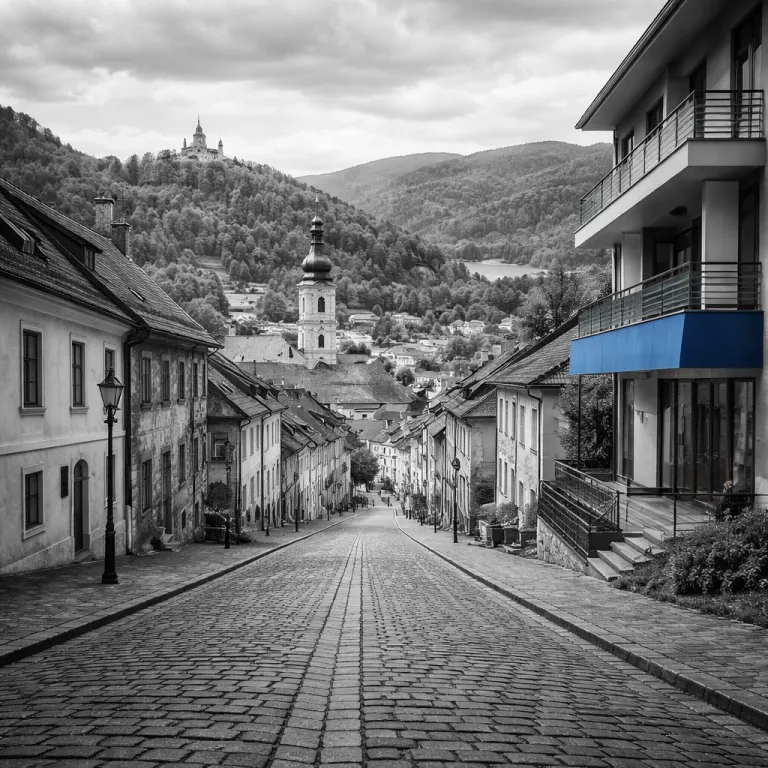
Shaping your Banská Štiavnica weekend in Slovakia
Banská Štiavnica sits in central Slovakia, about two hours by road from Bratislava and roughly three from Vienna, yet it feels like another continent. This former mining town folds Renaissance palaces, steep lanes and forested hills into a compact amphitheatre that works perfectly for a focused weekend in Banská Štiavnica, Slovakia. You arrive on Friday night, close the laptop and let the rhythm of a small Slovak town reset your pace.
The historic core of Banská Štiavnica is a UNESCO World Heritage Site that includes the town and the surrounding mining engineering landscape. That means your short stay can move from a cobbled square to an open-air mining reservoir in under twenty minutes, which is ideal when you only have a day or two. The official UNESCO description captures it clearly: “Banská Štiavnica is a UNESCO World Heritage mining town.”
Think of Saturday as your urban and mining history day, and Sunday as your nature and tajchy lakes day. This structure suits travellers who want a dense cultural hit without feeling rushed, and it lets you sample both the mining industry legacy and the quieter hills above the town. It also keeps logistics simple in a place where public transport is functional but not designed for tight corporate schedules.
Understanding the town’s scale and character
The population of Banská Štiavnica hovers around 9,400 people, which keeps the town intimate yet lively on weekends (Traveldojo, data accessed 2024). You can cross the historic centre on foot in under fifteen minutes, so every key place to visit sits within easy reach of your hotel. That compactness is rare in beautiful towns in this part of Europe, and it is a major reason visitors choose this town in Slovakia for short breaks.
Historically, the town of Banská Štiavnica was one of the richest mining centres in the former Kingdom of Hungary. Silver and gold from this corner of central Slovakia funded palaces, churches and schools, and the urban fabric still reflects that wealth. When you walk between the town hall and the old mining school buildings, you are tracing the axis that once linked power, education and the mining industry.
Today, the atmosphere is more creative than corporate, with galleries, cafés and small design shops filling former mining houses. That mix of World Heritage gravitas and contemporary culture makes Banská Štiavnica feel different from other towns Slovakia offers for quick day trips. It is a place where you can close a deal on Friday, then spend the weekend visiting a UNESCO town that still feels lived in rather than staged.
Where to stay: luxury and premium bases in a former mining town
Luxury in Banská Štiavnica is quiet rather than showy, and that suits the business leisure traveller. You will not find a global five-star flag in this town, but you will find characterful historic houses with strong service, good beds and thoughtful wine lists. For a weekend break in Banská Štiavnica, that combination usually matters more than a sprawling spa complex.
Look for properties around Námestie svätej Trojice, the main Trinity Square, where many of the best renovated townhouses sit. Staying on or just off this square keeps you close to the town hall, the main church and the steep lanes leading up toward the castles. It also means that early morning walks through the square feel almost private, especially outside the main Slovak holiday periods.
Several premium guesthouses occupy former mining academy or merchant buildings, with thick walls and vaulted ceilings that keep rooms cool in summer. Consider long-established addresses such as Hotel Bristol, Penzión Kachelman or the design-led Hotel Salamander, which all accept online reservations and phone bookings. If you need a more classic five-star spa experience before or after your stay, pair this weekend with a night at a High Tatras grand hotel, such as the property reviewed in depth in our guide to Slovakia's only five star mountain address.
Choosing the right area in town
Travellers who prioritise quiet often prefer the streets climbing toward the Nový zámok, the New Castle, where traffic thins and views open. From here, you can look back over the roofs of Banská Štiavnica and see how the town nestles into the old mining amphitheatre. It is a beautiful perspective that underlines why this is one of the most attractive historic towns in central Europe.
If you prefer to be closer to restaurants and cafés, stay near the lower square and the main church, where evening life concentrates. This area still feels relaxed by big city standards, but you will hear more of the town’s population moving between bars and wine cellars. For many visitors, that low-level hum is part of the charm of staying in a living Slovak town rather than a museum piece.
Parking can be tight in the historic core, so ask your hotel in Banská Štiavnica to reserve a space or advise on the nearest secure lot. The main paid car parks sit below the centre on Dolná Street and near the bus station, with clear signage and ticket machines. Walking remains the most efficient way to move between the castles, the mining museum and the tajchy trails, especially on a short Slovak weekend in Banská Štiavnica.
Mining heritage, castles and the walk that explains the town
The reason Banská Štiavnica became a UNESCO World Heritage Site lies beneath your feet. Ore seams shaped the street plan, the skyline and even the water system that still threads through the hills above the town. To understand this, you need one focused mining history walk that links the key places rather than a scatter of unconnected visits.
Start on Trinity Square, where the plague column anchors the space and the façades show the wealth that silver once brought to this Slovak town. From here, walk up past the town hall and the main parish church, noting how the streets climb steeply toward the defensive ridge. This ascent gives you a sense of how the town’s population once lived between sacred spaces, civic power and the mining shafts beyond.
Continue toward Starý zámok, the Old Castle, which began as a Romanesque church and later became a fortress. The complex now houses exhibitions that trace the town’s role within the Kingdom of Hungary and its long connection to the mining industry. Allow at least an hour here: the courtyards, chapels and views back over Banská Štiavnica reward unhurried visiting.
From castles to the mining museum
From Starý zámok, drop back through the lanes and then climb again toward Nový zámok, the New Castle, which stands like a white watchtower above the town. This castle offers a different perspective on the mining landscape, with views toward the hills where the tajchy reservoirs sit. On a clear day, the layered roofs of Banská Štiavnica and the surrounding forests form one of the most beautiful town panoramas in Slovakia.
After the castles, head for the open-air mining museum on the edge of town, where former shafts and equipment explain how the mining industry functioned. Here you can join a guided tour that takes you underground, giving a tangible sense of the conditions that once made this town rich. Standard opening hours run from late morning to late afternoon, with last underground entries typically around 15:00; check current times locally before you go.
Travellers with limited time sometimes hesitate about dedicating half a day to mining and mining technology, but it is worth it. The museum, together with the castles and the walk from Trinity Square, frames the entire story of Banská Štiavnica in a single loop. That narrative depth is what elevates a simple day trip into a more meaningful long weekend in this Slovak mining town.
Tajchy lakes and hidden trails: the half day that most visitors miss
Above the town, the forested hills hide the tajchy, a network of artificial lakes built to power the mining works. These reservoirs, part of the wider UNESCO heritage landscape, now serve as quiet swimming and walking spots for those who know where to look. Many foreign visitors never leave the squares and castles, which makes the tajchy feel like a private annex of the town.
Plan one half day, ideally Sunday morning, to walk from Banská Štiavnica up to one of the nearer tajchy. The paths begin close to the last houses of the town and climb steadily through mixed woodland, with occasional views back toward the church towers and castle silhouettes. Within an hour, you can be at a lakeside clearing where locals swim, picnic and stretch out weekends that feel far removed from corporate Europe.
These tajchy walks also reveal the engineering intelligence that once underpinned the mining forestry system around Banská Štiavnica. Channels, dams and sluices still mark the landscape, reminders that this was once a high-technology zone of the Kingdom of Hungary. For a business traveller, it is a rare chance to see how historical infrastructure shaped both a town and its surrounding nature.
Practical tips for tajchy day trips
Trails around the tajchy vary from gentle lakeside loops to steeper forest climbs, so choose a route that matches your energy after a long week. Popular Banská Štiavnica tajchy hiking routes start near Počúvadlianske jazero and Klinger, both reachable by marked paths from the centre in one to two hours. Wear decent walking shoes: paths can be muddy after rain, and mobile coverage drops in some hollows.
In summer, a quick swim in one of the tajchy can be the highlight of a Banská Štiavnica weekend in Slovakia. Water quality is generally good, and the setting, with forested slopes and glimpses back toward central Slovakia, feels almost Alpine. Remember that facilities are minimal, so bring water, a towel and a light snack from town.
If you are combining this weekend with a wider circuit of spa towns Slovakia offers, the tajchy provide a wilder counterpoint to more formal thermal complexes. For a deeper dive into Slovak spa culture, our feature on healing waters that Slovaks have kept to themselves sets the context. Together, these experiences show how water, from tajchy reservoirs to mineral springs, has long underpinned life in this part of Europe.
Eating and drinking well in a small Slovak town
Banská Štiavnica is not a culinary capital, but it punches above its weight for a town of this population. The best strategy is to focus on two or three reliable addresses and treat meals as part of the cultural experience rather than headline events. That mindset keeps expectations aligned with reality and leaves room for pleasant surprises.
In and around Trinity Square, you will find cafés and restaurants housed in former mining houses and school buildings. Menus lean toward Slovak classics, Central European comfort dishes and a growing number of lighter, seasonal plates. Ask for local wines from southern Slovakia and neighbouring Hungary, which pair well with hearty mountain food and reflect the broader region around Banská Štiavnica.
Lunch works best as a relaxed break between castle visits and mining museum tours, ideally on a terrace with a view of the square or the church. Dinner can be slightly more formal, though dress codes remain casual by big city standards, even for executives. Reserve ahead on weekends, especially during festivals, when the town’s capacity can feel stretched.
What to expect from service and atmosphere
Service in Banská Štiavnica tends to be warm, informal and occasionally unhurried, reflecting the pace of a small Slovak town. English is widely understood in central venues, though a few words of Slovak are always appreciated. Staff are often proud of the town’s UNESCO status and happy to share personal tips on lesser-known places to visit.
For coffee and a laptop hour, look for cafés in side streets off the main square, where the atmosphere is quieter. These spots often occupy former academy mining buildings or old merchant houses, with high ceilings and thick walls that make natural co-working spaces. Wi-Fi is generally reliable, though do not expect the bandwidth of a Bratislava office.
Evening drinks tend to centre on wine bars and small pubs rather than loud clubs, which suits the business leisure profile. It is easy to move between two or three venues on foot, taking in the night views of the castles and the softly lit town hall. That gentle circuit, glass in hand, is often when executives realise how effectively this town has pulled them out of their weekday headspace.
Extending your stay: from mining town to mountains and spas
While a focused Banská Štiavnica weekend in Slovakia works as a standalone escape, the town also fits neatly into longer itineraries. Its central Slovakia location makes it a natural pause between Bratislava and the High Tatras or between spa towns and eastern cities. For executives with flexible schedules, adding one or two extra days can turn a quick reset into a more layered journey.
From Banská Štiavnica, day trips to other historic towns Slovakia promotes for cultural tourism are feasible by car. You can trace former Kingdom of Hungary routes through mining and market towns, comparing how each place handled the transition from industry to tourism. Banská Štiavnica remains the most complete example of a mining heritage site, but the contrasts are instructive.
If mountains call, head north to the Tatras, where our guide to quiet premium bases in Tatranská Lomnica outlines where discerning families and executives now stay. This combination of a UNESCO mining town and a high mountain resort gives you two very different Slovak landscapes in one trip. It also shows how Slovakia, Banská Štiavnica and the Tatras together can rival more famous regions of Europe for short, high-quality breaks.
Practicalities for the long stay executive
Reaching Banská Štiavnica is straightforward by car from Bratislava or other major Slovak cities, with journey times that fit easily around meetings. The nearest international airports are in Bratislava and Vienna, and private transfers can be arranged through hotels or specialist operators. Once in town, walking covers almost all needs, with taxis available for late-night returns from outlying restaurants or the mining museum area.
For those balancing work and leisure, the town offers enough cafés and hotel lounges to handle a few hours of email without breaking the spell. Mobile coverage is solid in the centre, though it can dip slightly on some tajchy trails and in deeper valleys. That partial disconnection can be an asset, forcing a clearer boundary between the working day and the beautiful, slower hours of visiting this heritage town.
Ultimately, Banská Štiavnica rewards executives who value depth over spectacle. The combination of mining history, castles, tajchy lakes and a lived-in Slovak townscape creates a weekend that feels both efficient and restorative. For many, that balance is exactly what a long-stay executive escape in central Europe should deliver.
Key figures and context for Banská Štiavnica
- The population of Banská Štiavnica is approximately 9,426 people, which keeps the town intimate while still supporting a solid hospitality scene (Traveldojo, data accessed 2024).
- Banská Štiavnica and its surrounding mining landscape were inscribed as a UNESCO World Heritage Site in 1993, recognising both the historic town and the innovative water management system (UNESCO World Heritage Centre listing, accessed 2024).
- The town lies in the Banskobystrický region of central Slovakia, roughly 170 kilometres by road from Bratislava, making it suitable for weekend escapes from both Bratislava and Vienna.
- The UNESCO inscription covers not only the urban core but also the wider mining engineering landscape, including tajchy reservoirs and mining forestry infrastructure, which significantly expands the area of protected heritage beyond the town itself.
FAQ about a weekend in Banská Štiavnica for executives
What is Banská Štiavnica known for?
It's renowned for its rich mining history and well-preserved medieval architecture. That combination of mining heritage and intact townscape led to its recognition as a UNESCO World Heritage Site in 1993. For visitors, it means you can explore castles, churches and mining infrastructure within a very compact area.
How do I get to Banská Štiavnica?
Accessible by car or bus from major Slovak cities; nearest airport is in Bratislava. Most executives choose a rental car or private transfer, which allows flexible timing around meetings. The drive from Bratislava takes around two hours, depending on traffic and route.
Are there guided tours available?
Yes, various guided tours are offered, focusing on history, mining, and nature. In town, you will find walking tours that cover the main squares, castles and churches, as well as specialised visits to the open-air mining museum. Booking ahead is recommended on weekends and during peak holiday periods.
Is Banská Štiavnica suitable for a short executive break?
Very much so: the town’s small scale and dense concentration of heritage make it ideal for a two or three day stay. You can cover the key mining and cultural sites in one full day, then dedicate another half day to tajchy lakes or quiet work time in atmospheric cafés. Reliable transport links and a growing range of premium accommodation options strengthen its appeal for business leisure travellers.
Can I combine Banská Štiavnica with other Slovak destinations?
Yes, Banská Štiavnica sits in central Slovakia, which makes it easy to pair with Bratislava, the High Tatras or traditional spa towns. Many travellers spend a weekend here and then continue to mountain resorts or thermal complexes for a contrasting experience. This combination showcases both the cultural depth and natural variety that Slovakia offers within relatively short driving distances.