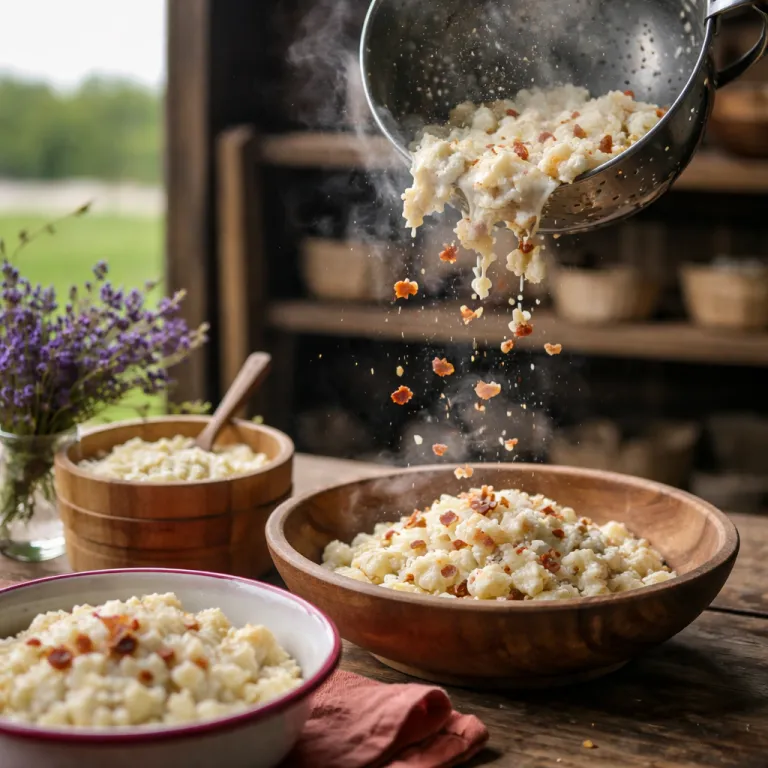
Why bryndzové halušky tastes different on a working salaš
On a working salaš in central Slovakia, bryndzové halušky stops being a tourist plate and becomes a living rhythm of sheep, milk and smoke. The same halušky dumplings you tried in Bratislava suddenly feel like a different traditional dish of Slovakia, because the bryndza cheese is made metres from the simmering water where the potato dough is cooking. For families planning a luxury stay, understanding this shift turns a simple national dish into a highlight that can quietly anchor an entire itinerary.
Traditional bryndzové halušky is a bowl of small potato dumplings folded with warm bryndza cheese and finished with crisp bacon, and it is widely recognised as Slovakia’s national dish. On a farm, those potato dumplings are usually shaped from freshly grated potatoes, a little flour and sometimes a flour egg mixture, then dropped into lightly salted simmering water until they float at a gentle medium boil. The cooks on these salaše are not chasing trends in Slovak cuisine; they are cooking for the shepherds first, which is why the food feels like genuine comfort food rather than a staged performance.
The difference starts with the sheep milk, which arrives at the cheesemaker’s hut still warm from the morning milking. Sheep farmers hand it over in small batches, and cheesemakers move quickly, because the way they handle this water rich, fat dense liquid will decide whether the final bryndza tastes lactic and bright or heavy and dull. As one local explanation puts it without embellishment, “A traditional Slovak dish of potato dumplings with sheep cheese and bacon.”
On a salaš, that sheep cheese is rarely anonymous; it is Slovenská bryndza with Protected Geographical Indication (PGI) status, made from pure sheep milk or a high proportion of it, never from generic cheese sheep blends. The curds are salted, sometimes lightly smoked, then matured just long enough to develop a faintly sheep feta tang without tipping into the crumbly texture of classic feta cheese. When cooks fold this bryndza cheese into hot halušky, the residual heat loosens the fat and creates a glossy sauce that clings to every piece of dough.
Families used to russet potatoes and industrial cheese bacon combinations will notice how clean the flavours feel here. The potatoes are often local mountain varieties rather than imported russet potatoes, and the bacon is usually from a single farm pig, smoked over beech or fruit wood. You eat slowly, because this is rich food, yet the balance of salt, fat and tang makes it surprisingly easy to eat, especially after a morning walking between sheep pens and watching the dogs work the flock.
For luxury travellers, the appeal is not rustic hardship but precision and authenticity layered onto a comfortable base. You return from the farm to a spa suite or a lakefront room, but the memory that stays is the steam rising from a bowl of bryndzové halušky while sheep graze just beyond the fence. That contrast between polished hotels and working agriculture is exactly where Slovakia’s national character feels most legible, and it is why a bryndzove halusky farm Slovakia experience deserves a deliberate place in a premium family itinerary.
Choosing the right region and hotel base for a salaš lunch
Families tempted by a bryndzove halusky farm Slovakia outing often underestimate distances and end up rushing the meal. The working salaše that genuinely welcome visitors cluster in three regions — Liptov, Podpoľanie and Orava — and each pairs best with a specific style of luxury or premium hotel. Planning your base around the farm visit, rather than treating it as a side trip from Bratislava, is the difference between a box ticked and a day your children will talk about for years.
Liptov is the most practical choice for a first bryndzové halušky pilgrimage, especially for families. Around Liptovský Mikuláš and the southern shore of Liptovská Mara, you will find spa resorts and design-forward mountain hotels that understand both Slovak cuisine and international expectations, with pools, kids’ clubs and serious wine lists. From here, a salaš serving bryndza cheese and potato dumplings at midday is usually within a 30 to 45 minute drive on good roads, which keeps time in the car manageable for younger children.
In Liptov, for example, Salaš Krajinka near Ružomberok (just off the E50 road, typically open daily from late morning to early evening) and Salaš Žiar in Žiarska dolina (a short drive from Liptovský Mikuláš, with longer hours in summer and reduced winter opening) both combine working sheep farms with simple dining rooms where you can eat bryndzové halušky made from their own sheep milk. Podpoľanie feels wilder, with rolling hills and smaller family-run properties that lean into traditional food and slower rhythms. Here, the national dish arrives at the table in heavier earthenware bowls, and the sheep cheese often carries a more pronounced smoke from older wooden huts. Orava, further north, offers cooler air, wooden villages and a handful of premium guesthouses where halušky appears on the evening menu alongside trout and game, making it easy to compare restaurant versions with the bryndzové halušky you eat on the farm at lunch.
When you choose a base, look for hotels that already curate local food experiences rather than simply listing “traditional Slovak dish” on the menu. Properties that partner with nearby sheep farmers and cheesemakers tend to understand the logistics of timing, from the morning milking to the midday service of dumplings pulled straight from simmering water. A good concierge will know which salaš is comfortable with children, which one has space for strollers, and how to avoid the busiest hours when tour buses might briefly disrupt the farm’s usual rhythm.
For families who care as much about wine as about sheep milk and potatoes, it can be worth pairing a Liptov stay with a later weekend in the Little Carpathians. A focused wine itinerary around Modra’s cellars and Mlyn 108, such as the one outlined in this guide to where to drink Slovak wine, complements the dairy-heavy comfort food of bryndzové halušky with crisp whites and skin-contact cuvées. The contrast between a smoky cheese bacon lunch on a hillside and a polished tasting in a centuries-old cellar gives a family trip a satisfying narrative arc.
Whichever region you choose, keep driving times realistic and build in space for children to run. A bryndzove halusky farm Slovakia day works best when you leave your hotel after an unhurried breakfast, reach the salaš in time to watch the last of the cheese making, then sit down for a proper national dish lunch before the afternoon heat. Using an offline map app and saving the farm’s location in advance helps avoid wrong turns on narrow rural roads, so the visit feels like the centre of the day rather than an obligation squeezed between other attractions.
How bryndza is made on the farm — and why it matters for flavour
On a working salaš, the journey from sheep to bryndza cheese is short, physical and surprisingly quiet. Sheep farmers start before dawn, bringing the flock into simple milking sheds where the only sounds are hooves, metal buckets and the low murmur of voices. For children raised on supermarket food, watching sheep milk flow directly into pails is often the first time they connect an abstract cheese with a living animal.
Once the milk reaches the cheesemaker’s hut, the pace changes but the attention stays sharp. Cheesemakers heat the milk gently, add rennet and wait for the curds to form, skimming off excess water and adjusting the process by eye rather than by digital thermometer. The tools are basic — wooden paddles, cloths, simple vats — yet the accumulated expertise means they can read the milk’s mood in a way that no recipe can fully capture.
After cutting and draining, the curds are salted and sometimes lightly smoked, then left to mature into bryndza with its characteristic spreadable texture and tang. The balance between salt and moisture is crucial; too much water and the cheese feels flat, too little and it becomes crumbly like sheep feta or generic feta cheese. On farms that respect the Protected Geographical Indication rules for Slovenská bryndza, the proportion of sheep milk stays high, which gives the final cheese a depth that industrial blends of sheep and cow milk cannot match.
Families often ask why the bryndzové halušky they eat on a salaš tastes so different from the same national dish in a city restaurant. The answer lies in this tight chain from pasture to plate, where the bryndza cheese is used within days, sometimes hours, of being made, and never travels far from the sheep that produced it. When cooks fold it into hot potato dumplings, the fresh acidity cuts through the richness of bacon and flour-based dough, turning what could be heavy food into something unexpectedly nuanced.
In Bratislava’s fine dining rooms, chefs now play with this tradition, deconstructing halušky into foams, gnocchi and tasting menu bites. A visit to the city’s first Michelin-starred kitchens, such as those profiled in this look at Bratislava’s Michelin star race, shows how far Slovak cuisine has travelled from the farmyard. Yet even there, the best plates still rely on serious bryndza, often sourced from the same regions where your children might be feeding lambs earlier in the week.
For a premium family trip, the point is not to turn every meal into a lecture on dairy science. It is to let children taste the difference between a bowl of halušky made with anonymous sheep cheese and one made with bryndza that still carries the scent of the hillside. When they watch the curds being stirred, see the whey running off like cloudy water and then sit down to eat, the national dish becomes a story they can retell, not just a photo on a menu.
Family friendly salaše that serve a proper midday halušky
Not every salaš in Slovakia is set up to welcome visiting families, and even fewer serve a consistent midday meal that respects both the farm’s rhythm and your children’s patience. The best options for a bryndzove halusky farm Slovakia day are working sheep farms that have gradually adapted to culinary tourism without turning into theme parks. They still prioritise sheep, milk and cheese, but they understand that a family arriving from a nearby luxury hotel needs clear expectations and a clean table.
In the Liptov region, several salaše near Ružomberok and Liptovský Hrádok have built simple dining rooms where you can sit down to bryndzové halušky, grilled sheep cheese and seasonal soups. The halušky here are usually made from freshly grated potatoes mixed with flour and a little egg salt seasoning, then pushed through a special sieve directly into simmering water. Portions are generous, and the cheese bacon topping is often served on the side so that parents can control how much bacon younger children eat.
Podpoľanie’s farms tend to be smaller, with outdoor benches and views over meadows where sheep graze within sight of the kitchen. Here, the national dish might arrive in slightly different forms — sometimes with more bryndza cheese, sometimes with a thicker layer of bacon fat — but the core remains the same combination of potato dumplings, sheep cheese and crisp pork. Orava’s salaše, often tucked into forest clearings, can feel more remote, yet they reward the effort with halušky that tastes intensely of sheep milk and wood smoke.
When you plan, call ahead or ask your hotel to confirm opening hours and whether a full lunch will be served on the day you visit. These are working farms, not staged attractions, and the cooks’ priority is feeding shepherds and staff before any visitor who wants to eat. A good concierge at a property already featured in guides to top rated luxury hotels in Slovakia will usually know which salaš is reliable for a midday national dish and which is better for a quick snack.
Families with very young children should look for farms that offer a bit more than just a bench and a bowl. Some salaše keep a few goats or rabbits near the dining area, which gives restless kids something to watch while adults linger over coffee and perhaps a second plate of bryndzové halušky. Others offer short, informal demonstrations of how the potato dough is mixed and how the dumplings are cut into the simmering water, which can be surprisingly hypnotic for children who like to see how things work.
Wherever you go, remember that this is still Slovak countryside, not a curated resort. Paths may be uneven, dogs may roam freely, and the pace will follow the needs of sheep and weather rather than your schedule. That is precisely why a carefully chosen bryndzove halusky farm Slovakia visit feels so refreshing in the context of a polished hotel holiday — it is one of the few moments where the national dish, the landscape and the people who sustain it align without choreography.
What children actually do on a bryndza farm visit
Parents often worry that a bryndzove halusky farm Slovakia excursion will be little more than a long lunch with scenery. In practice, a well chosen salaš offers a full half day of gentle, unscripted activity that suits children far better than another museum or shopping street. The key is to arrive with time to spare, dress for mud and accept that the most memorable moments will not be the ones you planned.
On many farms, the first stop is the sheep pen, where children can watch the flock move as a single, shifting mass. The shepherds’ dogs are usually the stars here, weaving through the sheep with a focus that fascinates even teenagers who thought they were too old to care about animals. Younger children often end up imitating the calls they hear, turning the space between the hotel car and the cheese hut into an impromptu game.
Inside the dairy room, attention shifts to the transformation from milk to cheese. Kids can see the curds forming, watch whey being drained off like cloudy water and sometimes even stir the mixture under supervision, which gives them a tactile sense of how bryndza cheese begins. For families used to pasteurised cartons and plastic-wrapped blocks, this close contact with sheep milk and fresh curds can be quietly radical.
Once the cheese making slows, the focus moves to the kitchen where bryndzové halušky is prepared. Children can watch cooks mix grated potatoes with flour and sometimes a flour egg blend, then push the soft dough through a special board directly into simmering water. The moment when the dumplings rise to the surface at a steady medium boil is oddly satisfying, and it often becomes the detail they remember when they later describe the national dish to friends back home.
While the food cooks, there is usually time to explore the immediate surroundings. Some salaše have simple play areas, others just open fields where children can run, collect wildflowers or watch clouds drift over the hills of central Slovakia. Parents can keep an eye on them from nearby benches, glass of local drink in hand, knowing that the next plate of halušky with cheese bacon topping will arrive as soon as it is ready.
For families travelling with children who have dietary restrictions or who are cautious eaters, the farm setting can actually make new foods less intimidating. Seeing the potatoes, the sheep and the cooks at work demystifies the bowl of dumplings and sheep cheese that arrives at the table, making it easier to persuade a hesitant child to eat at least a few bites. By the time you return to your luxury hotel, bryndzové halušky has shifted from an abstract national dish into a personal story your children helped to shape.
Language, logistics and how to keep the day comfortable
Working salaše are not visitor centres, and that is part of their charm. English may be limited, menus can be handwritten and the rhythm of the day follows sheep and weather rather than online booking slots. For a premium family used to seamless hotel service, a little preparation turns this into an adventure rather than a source of stress.
The language question is usually the first concern. In many Liptov and Orava farms, at least one younger family member or seasonal worker will speak some English, especially around food words like halušky, cheese, bacon and potatoes. Where English is scarce, a few Slovak phrases — “prosím” for please, “ďakujem” for thank you, “bryndzové halušky pre štyroch” for halušky for four — go a long way, and children often enjoy practising them on the spot.
Logistics start with timing. Aim to arrive late morning, when the main cheese making is winding down and the kitchen is gearing up for lunch, rather than during the early milking when everyone is focused on sheep and water buckets. This gives you a better chance of finding a table, ordering bryndzové halušky and perhaps a second dish from Slovakia’s countryside cooking, such as grilled sheep cheese or a lighter soup, without feeling you are in the way.
Payment is usually straightforward, with most established salaše now accepting cards, though carrying some cash in euros remains wise in rural Slovakia. Dress codes lean towards practical layers and shoes that can handle mud, even if you are driving out from a five-star spa where the lobby is all marble and glass. Remember that the same flour, egg, salt and potato dough that makes perfect dumplings can also cling to children’s clothes when they get close to the kitchen, so pack a spare T-shirt for the ride back.
Families sometimes ask whether a bryndzove halusky farm Slovakia day is compatible with other activities, such as hiking or spa time. The answer is yes, if you keep expectations realistic and avoid overloading the schedule; a morning on the farm, a long lunch of national dish comfort food and an easy afternoon walk or swim is usually enough. Trying to add a long drive or a complex city visit on top of a heavy halušky meal risks turning a gentle day into a slog.
Finally, be honest with your hotel about what you want from the experience. A concierge who understands both luxury expectations and rural realities can steer you towards a salaš where the bryndza cheese is excellent, the potato dumplings are made to order and the welcome for children is genuine rather than grudging. With that support, the small uncertainties of language and logistics become part of the story, not obstacles to it.
From farm bowl to hotel table: weaving halušky into a luxury itinerary
A bryndzove halusky farm Slovakia visit works best when it is not an isolated event but a thread running through your stay. The bowl of bryndzové halušky you eat on a hillside at midday should echo, in more polished form, in the dishes you order back at your hotel. That continuity turns a single national dish into a lens on Slovak cuisine, from rustic comfort food to tasting menu refinement.
Start by paying attention to how different kitchens handle the same core elements of potato dumplings, sheep cheese and bacon. On the farm, the halušky are usually irregular, shaped by hand or pushed through a simple board into simmering water, with a sauce that forms as bryndza cheese melts into the hot dumplings. In a luxury hotel restaurant, you might see neater dumplings, perhaps closer to Italian gnocchi, with a lighter sheep cheese emulsion and crisp bacon shards arranged with geometric care.
Use these contrasts to talk with older children about how food travels from countryside to city. The same sheep milk that becomes bryndza on a salaš might be whipped into a mousse or folded into a savoury cheesecake in a Bratislava dining room, yet the flavour profile — lactic, slightly sharp, deeply savoury — remains recognisably Slovak. When you order a modern dish that references halušky traditions, you can trace each element back to the farm visit, from the potatoes to the sheep feta notes in the sauce.
For parents who enjoy cooking, a farm visit also offers practical inspiration. Watching cooks judge the thickness of the potato dough, the ratio of flour to grated potatoes and the right moment to pull dumplings from medium boiling water gives you a template to recreate bryndzové halušky at home. You may not have access to true Slovenská bryndza, but a blend of high quality sheep feta and a softer cheese can approximate the texture, especially if you respect the balance of salt and fat that defines the national dish.
Some families even turn the experience into a gentle challenge, comparing versions of halušky across the trip. One day it is a farm bowl with robust cheese bacon topping, the next it is a lighter interpretation in a city bistro, and finally a refined plate in a hotel that treats Slovak cuisine with the same seriousness as French or Italian traditions. By the time you leave Slovakia, bryndzové halušky has become more than a single meal; it is a narrative arc that links sheep, farmers, cheesemakers and cooks into a coherent story.
Back home, that story often proves more durable than any souvenir. Children remember the sheep, the steam rising from the dumplings, the way the cheese clung to their spoons, and parents remember the quiet satisfaction of seeing a national dish in its proper context. For a premium family traveller, that is the real value of weaving a bryndzove halusky farm Slovakia day into a luxury itinerary — it grounds the trip in something tangible, flavourful and unmistakably local.
Key figures behind Slovakia’s bryndza and salaš culture
- According to summaries from the Slovak Ministry of Agriculture and Rural Development, Slovakia counts on the order of 1,500–2,000 registered sheep farms nationwide in the early 2020s, which means a significant share of rural land is still shaped by flocks that ultimately sustain bryndza production.1
- Industry data from the Slovak Dairy Association indicate that annual bryndza output is measured in several thousand tons — roughly 4,000–5,000 tons in recent years — underlining how central sheep milk cheese remains to Slovak cuisine despite the rise of industrial cow milk products.2
- Working salaše open to visitors operate year round in regions such as Liptov, Podpoľanie and Orava, giving travellers flexibility to plan a bryndzove halusky farm Slovakia visit outside the peak summer holiday window.
- Bryndzové halušky is widely recognised as Slovakia’s national dish, and its presence on menus from simple salaše to Michelin-level restaurants reflects a broader revival of interest in traditional foods and local farming practices.
- Culinary tourism focused on bryndza cheese and potato dumplings supports local economies by channelling visitor spending directly to sheep farmers, cheesemakers and rural cooks rather than only to urban hospitality hubs.
1 Figures based on public statistics and sector reports available from the Slovak Ministry of Agriculture and Rural Development (2019–2023). Exact numbers vary by year and classification method; readers should consult the latest ministry yearbooks for current data.
2 Production ranges compiled from Slovak Dairy Association overviews of bryndza and sheep cheese output in the 2018–2022 period; detailed tables are published in the association’s annual reports.
FAQ about bryndzové halušky and farm visits in Slovakia
What is bryndzové halušky and why is it important in Slovakia?
Bryndzové halušky is a traditional Slovak dish of potato dumplings with sheep cheese and bacon, and it is widely regarded as the national dish. The dumplings are made from grated potatoes and flour, cooked in simmering water, then mixed with bryndza cheese made from sheep milk. Its importance lies in how it connects everyday food with sheep farming, cheesemaking and the broader identity of Slovak cuisine.
Where is the best place to eat bryndzové halušky on a farm?
The most rewarding places to eat bryndzové halušky on a farm are working salaše in the Liptov, Podpoľanie and Orava regions. These areas combine active sheep farms, skilled cheesemakers and accessible roads from quality hotels, making them ideal for families. Choosing a Liptov area base is often the most practical option for a first bryndzove halusky farm Slovakia experience.
Can I visit a sheep farm and see how bryndza is made?
Yes, many traditional sheep farms in Slovakia allow visitors to observe parts of the cheesemaking process, especially in regions with a strong salaš culture. You can often watch milking, see curds forming and learn how bryndza cheese is salted and matured. It is best to arrange the visit through your hotel or by calling ahead, as these are working farms rather than formal visitor centres.
Is bryndza cheese available outside Slovakia?
Bryndza cheese may be found in specialty stores or online, but availability varies by country and retailer. Outside Slovakia, it is sometimes replaced with generic sheep feta or mixed milk cheeses, which do not fully replicate the flavour of Slovenská bryndza. For the most authentic taste, trying bryndza on a Slovak farm or in a traditional restaurant remains the benchmark.
What should families know before taking children to a salaš?
Families should be prepared for a genuine farm environment with animals, mud and simple facilities, rather than a polished attraction. Comfortable shoes, spare clothes for children and some basic Slovak phrases help keep the day smooth. With realistic expectations and a bit of planning, a bryndzove halusky farm Slovakia visit can become one of the most engaging and educational parts of a luxury family trip.